
Hit Little Goals, Gain Momentum: The Small-Win Method That Actually Sticks
Big goals can feel like carrying a full backpack uphill. You start strong, then life gets loud, and your motivation drops. After a few missed days, it’s easy to think, “Maybe I’m just not disciplined.”
Here’s the truth: you don’t need more hype. You need little goals that are easy to start and easy to finish. Those quick wins create momentum, and momentum makes the next step feel lighter.
In this post, you’ll learn how to pick tiny goals you’ll actually complete, make them automatic, track progress without stress, and stack wins without burning out.
Why little goals work when big goals stall
Most people don’t fail because they don’t care. They fail because the first step feels too big. When the task looks heavy, your brain tries to protect you by avoiding it. That avoidance looks like procrastination, scrolling, or “I’ll start Monday.”
Little goals fix that because they shrink the starting pressure. They also give you proof you can follow through. That proof matters more than a perfect plan.

A big goal says, “Change your life.” A little goal says, “Start now.” That’s why small goals build momentum even when you’re tired, busy, or not in the mood.
Momentum is a loop, not a personality trait
Some people look “motivated,” but motivation usually shows up after action. In other words, momentum is a loop: you do a small action, you get a small result, and then you want to do it again.
Think about a time you cleaned one corner of a room. Once that corner looked better, finishing the rest felt easier. The room didn’t change your personality, it changed your energy.
The same thing happens with habits. A 5-minute walk feels almost silly at first. Still, you get fresh air, a tiny mood boost, and a win you can point to. A week later, 5 minutes turns into 10, then 20, because your brain now expects success.
Action comes first. The “I feel like it” part often arrives later.
Small goals lower the mental cost of starting
Starting is hard because it has a mental price tag. Big tasks bring fear (what if I do it wrong?), decision fatigue (where do I even begin?), and perfectionism (if I can’t do it well, why do it?).
Tiny steps lower that price.
Opening a document is easier than “write the report.” Putting on shoes is easier than “go to the gym.” Washing one plate is easier than “clean the whole kitchen.” These “too small to fail” actions beat procrastination because there’s less to argue about in your head.
Also, small goals help you avoid the trap of waiting for the perfect moment. You stop asking for ideal conditions and start building progress inside real life.
How to choose little goals you will actually finish
Not all small goals work. Some are still too big on a rough day. Others are vague, like “be healthier,” which gives you nothing you can complete by tonight.
A good little goal has three traits:
- It’s finishable on a bad day.
- It’s clear and measurable.
- It’s in your control (an action, not an outcome).
Outcomes are great long-term targets, like “lose 15 pounds” or “save $5,000.” But outcomes don’t tell you what to do at 7:30 pm on a Tuesday. Little goals do.
Shrink the goal until it feels almost too easy
Use a simple “shrink method” to turn any big goal into a tiny action you can start now.
Start with the big goal, then keep shrinking:
- Big goal (the direction)
- Next action (the real first step)
- 10-minute version (quick but meaningful)
- 2-minute version (the “no excuses” version)
Here are a few examples you can copy:
- Fitness: Get in shape → do a workout → 10 minutes of bodyweight moves → 1 push-up
- Studying: Pass the test → review notes → 10 minutes of flashcards → open notes and read one page
- Saving money: Build savings → transfer money → transfer $10 → move $1
- Cleaning: Keep a tidy home → clean kitchen → wipe counters for 10 minutes → throw away 5 items
- Creative work: Write a book → write today → write for 10 minutes → write one sentence

If the 2-minute version feels “too easy,” that’s the point. Easy is what makes it repeatable, and repeatable is what builds momentum.
Set a minimum goal, then add optional bonuses
One of the best ways to stay consistent is to set a “floor and bonus.”
- The floor is your minimum. You must be able to do it even on a messy day.
- The bonus is extra credit. Do it when you have time and energy.
Set context with a quick comparison table. The goal is to protect consistency without lowering standards forever.
| Area | Floor (minimum) | Bonus (optional) |
|---|---|---|
| Exercise | 1 push-up | 20-minute workout |
| Writing | 1 sentence | 500 words |
| Reading | 1 page | 30 minutes |
| Money | Transfer $1 | Transfer $25 |
| Cleaning | Put away 5 items | 15-minute tidy |
The takeaway: the floor keeps the streak alive. Bonuses help you grow, but they never become the price of entry.
Make tiny goals automatic with simple systems
Goals help you decide what matters. Systems help you do it without debating yourself every day.
If you rely on memory and willpower, you’ll miss days for normal reasons: late meetings, low sleep, or a bad mood. On the other hand, a simple system makes tiny goals feel like brushing your teeth. It just happens.
Two system parts matter most: cues (when and where) and friction (how hard it is to start). Fix those, and your tiny goals become more automatic.
Use cues, like time and place, so you do not rely on memory
A cue is a trigger that tells your brain, “Now we do the thing.” This is sometimes called an implementation intention, but the idea is simple: pair a habit with a time and place.
Try this format:
After I ________, I will ________ for ________.
A few ready-to-use examples:
- After I brush my teeth, I will stretch for 2 minutes.
- After I start my coffee, I will write one sentence.
- After I sit down for lunch, I will read one page.
- After I plug in my phone at night, I will put away 5 items.
The trick is to attach your tiny goal to something you already do. That way, you don’t have to “remember” your goal. The day reminds you.
Lower friction, set up your space, tools, and next step
Friction is anything that makes starting harder. It can be physical (gear isn’t ready) or mental (you have to decide what to do). Reduce friction and you reduce excuses.
Small changes work fast:
- Lay out workout clothes before bed.
- Keep a water bottle where you’ll see it.
- Open your laptop to the right tab, then stop.
- Put your book on your pillow so you can’t miss it.
- Keep a notebook and pen on the table, not in a drawer.
Here’s a helpful rule: make the first step obvious. If your tiny goal is “write one sentence,” leave the document open. If it’s “walk 5 minutes,” put your shoes by the door. The point is to remove the setup work that drains you before you begin.
Also, don’t punish yourself for missed days. Adjust the system instead. Missed days usually mean the goal was too big, the cue was weak, or the friction was too high.
Track your wins, stack them, and recover fast when you slip
Progress feels better when you can see it. Tracking turns “I think I’m doing okay” into “I did it 6 times this week.” That clarity builds confidence, and confidence feeds momentum.
Still, tracking should feel light. If your tracker becomes homework, you’ll quit tracking, then quit the habit. Keep it simple enough that you can maintain it during busy weeks.
Pick a simple way to track progress you will not quit
Choose one method that matches your style. The best tracker is the one you’ll use without thinking.
Here are a few options that work for most people:
- Calendar Xs: Mark an X on each day you hit the tiny goal.
- Habit app: Tap one button when you finish (keep it minimal).
- Notebook: Write the date and one line about what you did.
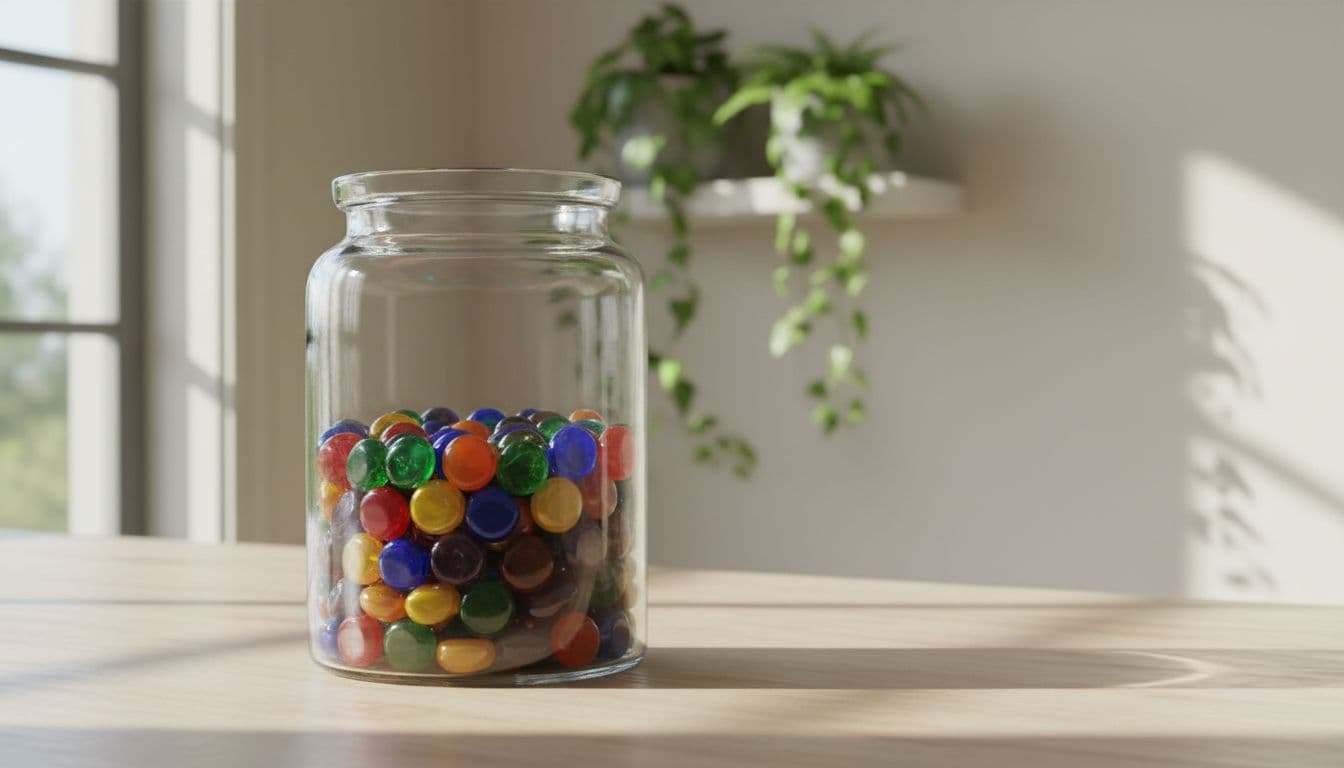
- Token jar: Drop in a marble or coin for every win.
- Sticky note tally: One tally mark, then move on.
What should you record? Keep it short: date, tiny goal done, and one sentence on how it felt. That last part helps you notice patterns, like “I always feel better after I start.”
When life happens, use a reset rule instead of giving up
Slip-ups are normal. The problem starts when you turn a slip into a story, like “I always quit.” Replace that story with a rule.
A strong rule is: never miss twice.
If you miss a day, your only job is to do the tiny version the next day. Even a 2-minute rescue counts. That rescue protects your identity as someone who shows up.
When you slip, ask what caused it:
- Were you up too late?
- Did you take on too many goals at once?
- Did your minimum stop being “bad-day easy”?
Then adjust the floor, not your self-respect.
Here’s a short momentum plan you can copy:
- Pick one habit that matters.
- Shrink it to a 2-minute version.
- Attach it to a daily cue (time and place).
- Track it for 7 days, then level up by 10 percent.
Don’t aim for a perfect month. Aim for a solid next rep.
Conclusion
Big goals are fine, but they don’t create progress by themselves. Little goals do, because they give you fast wins you can repeat. Over time, those wins build momentum that lasts longer than motivation.
Pick one goal today, shrink it to a 2-minute version, choose a cue, and track it for the next 7 days. When you look back, you won’t just see effort, you’ll see proof you can keep going.