Cold, Tired, Stuck: What the Bell Story Teaches About Discomfort (and 9 Ways to Keep Moving)
Some mornings feel like you’re wearing wet clothes you can’t take off. The room is cold. Your body is heavy. Your brain keeps offering the same deal: “Skip today, start again when you feel better.”
That’s why the Bell Story sticks. It gives you a simple script for the exact moment you want to stop. Not the heroic moment. The small, quiet moment when quitting feels logical.
This post will help you name what discomfort is trying to teach you, then use 9 practical ways to keep moving even when motivation is gone.
The Bell Story in plain English, why it hits so hard when you feel stuck
In Navy SEAL training (BUD/S), there’s a bell. If a trainee wants to quit, they ring it. The bell doesn’t argue. It doesn’t ask for a reason. It just ends the suffering fast.
During the coldest, most exhausting stretch, the bell becomes a magnet. People are wet, shaking, sleep-deprived, and running on fumes. In that state, the simplest thought appears: “One ring, and this stops.”
Then comes the moment that makes the story useful. Some trainees don’t decide to “win.” They decide to take the next step. They make it to the next meal. The next check-in. The next hour. Tiny choices, repeated, beat the urge to end the pain.

Stories like this land because they hand your brain a ready-made response when it hurts. Also, the point isn’t toughness for its own sake. The point is choosing the next right step, even when you don’t feel like yourself.
What the Bell Story is really about (discomfort as a signal, not a stop sign)
Discomfort and danger aren’t the same thing. Danger says, “Stop now or you’ll get hurt.” Discomfort often says, “This is new, and your body or mind wants to go back to normal.”
That confusion matters, because discomfort shows up right before growth. It can feel like a warning, yet it’s often a sign you’re doing something that asks more of you.
Think of it like this: discomfort is the smoke alarm that goes off when you make toast. It’s loud and unpleasant, but it doesn’t always mean the house is on fire.
A few everyday examples:
- Learning a new skill feels clumsy at first, so you want to quit early.
- Starting therapy can make emotions feel sharper before they feel lighter.
- Building stamina burns, even when your body is adapting in a healthy way.
- Having a hard talk raises your heart rate, even when it’s the right move.
Discomfort isn’t a green light to push harder forever. It’s a cue to pay attention, adjust, and continue with care.
The hidden trap: when “I feel bad” turns into “I should stop”
Cold, tired, and stress shrink your thinking. They make tomorrow feel far away and make today feel like the whole story. In that state, your mind treats feelings like facts.
This is the trap: “I feel bad” turns into “I should stop.” It sounds reasonable because it feels protective. Still, it often blocks the very action that would help.
Try this one-line reframe and keep it close:
Feelings are real, but they aren’t always instructions.
A helpful way to spot the choice point is to ask, “If I felt 10 percent better, would I still think quitting is the right call?” If the answer is no, you may not need a new plan. You may just need traction.
Discomfort has patterns, learn them so they stop controlling you
Discomfort isn’t random. It tends to repeat in a few common forms, and each form needs a different first move. Once you name what’s happening, you stop treating every bad day like a personal failure.
In March 2026, life is loud and fast. Notifications pull attention all day, and many people live in a constant low buzz of stress. As a result, default habits take over when you’re drained. Naming your state gives you back a small slice of control.
Cold, tired, stuck: three different feelings, three different needs
Cold, tired, and stuck can look similar from the outside. Inside, they’re different problems.
Cold usually means friction. Maybe it’s literal cold, or maybe it’s emotional dread. You don’t want to start because starting feels sharp. What helps first is warmth and easing in: a shower, layers, a short warm-up, music, a hot drink, or simply moving your body for 60 seconds.
Tired usually means low fuel. This can be sleep debt, burnout, or brain overload. What helps first is recovery plus boundaries: food, water, a short walk, a 20-minute nap, or cutting the task down so it doesn’t demand willpower you don’t have.
Stuck usually means fear or confusion. Perfectionism is common here. So is avoiding a choice. What helps first is clarity, not pressure: define the next step in one sentence, reduce options, and commit to a small action that creates feedback.
When you treat “stuck” like “tired,” you rest and still feel bad. When you treat “tired” like “stuck,” you force focus and get resentful. Labeling the feeling prevents the wrong fix.
How to tell the difference between hard discomfort and real danger
This article is about everyday discomfort, not pushing through harm. When danger signs show up, the right move is to stop and get help.
Use this simple safety check. If any of these apply, pause and seek medical or mental health support:
- Sharp, sudden, or escalating pain (especially in joints, chest, or head)
- Dizziness, fainting, or trouble breathing
- Signs of injury (swelling, numbness, loss of function)
- Panic that keeps rising and won’t settle with slowing down
- Suicidal thoughts, self-harm urges, or feeling unsafe with yourself
- Confusion or symptoms that feel severe or unusual for you
If you’re unsure, play it safe. Progress counts most when you can come back tomorrow.
9 ways to keep moving anyway, even when you feel cold, tired, or stuck
When you feel awful, big plans can backfire. What works better is a set of small, repeatable moves that lower resistance. You’re not trying to “win the day.” You’re trying to stay in motion.
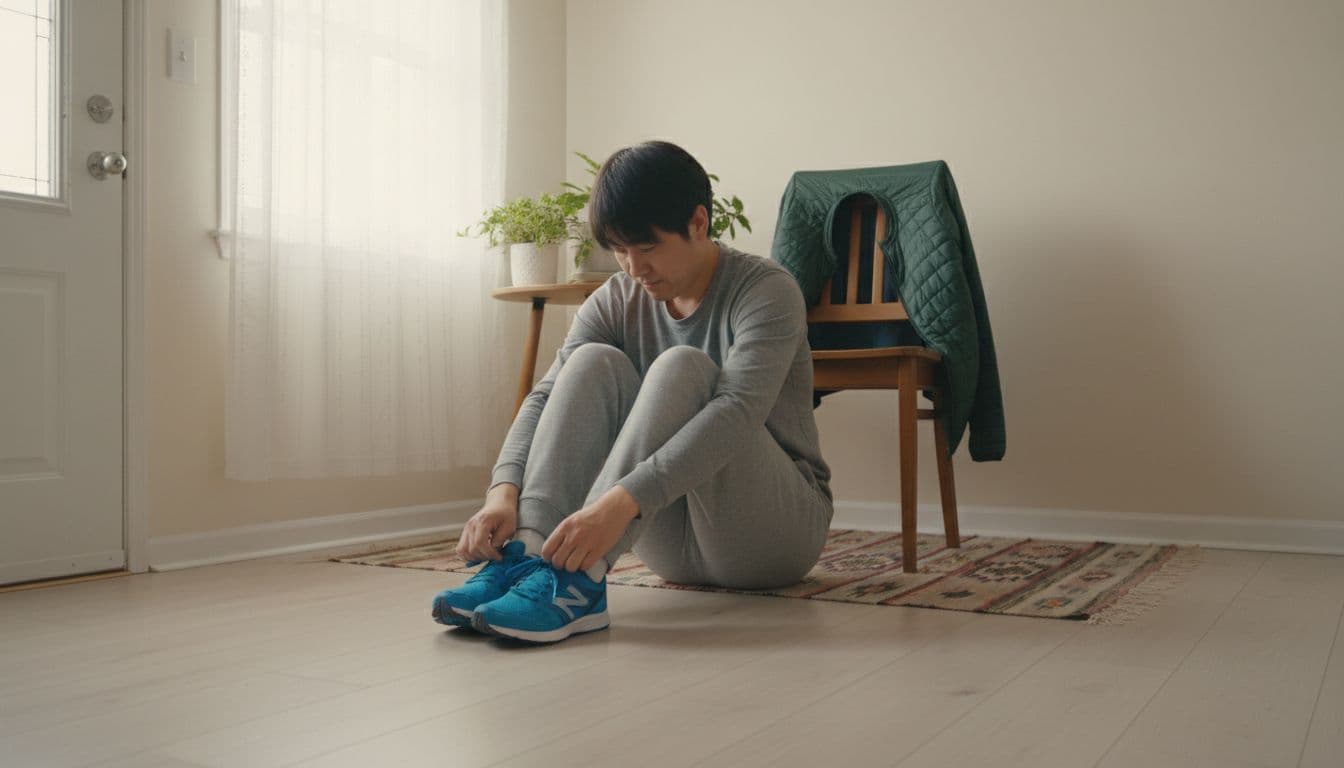
The 9 tips: shrink the task, warm up your mind, and build traction
- Pick the smallest next step (the 2-minute start).
Do something you can finish in two minutes. It lowers the “startup cost.” For example, open the document and title it, or put your shoes on and step outside. - Use a “just show up” rule (attendance over performance).
Decide you’ll show up, even if you do it badly. This keeps identity intact. For example, walk into the gym and stretch for five minutes, then you can leave. - Warm up first (body or brain), then decide.
Don’t negotiate while cold. Warmth changes your mood and focus. For example, do a one-song warm-up, or write three messy sentences before you judge the work. - Set a timer and stop on purpose (10 to 20 minutes).
A clear end reduces dread. You can do almost anything for 10 minutes. For example, clean for 15 minutes and stop, even if it’s not perfect. - Remove one piece of friction.
Make the start easier than the excuse. For example, set clothes out, charge the laptop, close extra tabs, or put the book on your pillow. - Use a simple script when you want to quit.
Pick one sentence and repeat it. It blocks spiral thinking. Try: “Not forever, just the next step.” For example, finish one more problem, not the whole assignment. - Track proof, not feelings.
Feelings swing. Proof stacks. For example, mark an X on a calendar, log one rep count, or note “wrote 120 words,” even if you hated it. - Ask for a tether (kind accountability).
Borrow someone else’s steadiness. For example, text a friend “Starting now, 10 minutes,” or join a class where your presence gets noticed. - End with a win (tiny review and reset).
Close the loop so tomorrow is easier. For example, write one line: “What worked today?” Then reset your space in under 60 seconds.
On rough days, stack a few tips. A common combo is smallest next step plus timer plus friction removal.
A quick “stuck day” plan you can copy in under 5 minutes
When you can’t think, follow a script. This one works for workouts, work projects, studying, and chores.
- Breathe for 20 seconds. Inhale slow, exhale longer.
- Name the state out loud: cold, tired, or stuck.
- Choose one tool: 2-minute start, warm-up, or 10-minute timer.
- Do 10 minutes, then stop on purpose. Quitting on schedule builds trust.
- Log one proof point, then reset one thing: shoes by the door, tabs closed, notes ready.
That’s it. You’re not trying to feel great. You’re proving you can move while you feel bad.
Conclusion
Discomfort is part of the path, but you decide what it means. Sometimes it signals danger, but often it’s just the price of change. In those moments, progress usually looks like small, repeated starts.
Pick one tip from the list and try it today, then write down the proof. When the urge to quit shows up again, you’ll have something solid to point to. Ring the bell in a different way, take the next step, and keep going on purpose.